Indoor Wedding VenuesInquiry
HomeIndoor Wedding TypesLayoutsSeasonal WeddingsNYC AreasPlanning GuidesVenue
Indoor ceremony-to-reception transition in NYC with cocktail hour and room flip
Indoor ceremony-to-reception transition with cocktail hour and room flip — Indoor Wedding Venues, NYC

Transitions

Indoor Ceremony-to-Reception Transitions in NYC

The transition between ceremony and reception is one of the most important flow decisions in an indoor wedding. A smooth transition keeps the energy moving and guests comfortable. This guide compares the flip, the move, and continuous flow — covering timing, staffing, cocktail hour, and coordination for a seamless indoor wedding flow in NYC.

Why the transition defines the indoor wedding flow

The transition between ceremony and reception — often called the flip — is one of the most important flow decisions in an indoor wedding. A smooth transition keeps the energy moving and guests comfortable; a poorly planned one creates awkward downtime. Indoors, you control the transition precisely, with no weather to force last-minute changes.

There are three main transition strategies: the flip (same room reset), the move (separate ceremony and reception rooms), and the continuous flow (no transition needed). Each has different timing, staffing, and guest-experience implications. Use the transition planner below to estimate flip time for your setup.

  • ✓Full control over the transition timing and flow
  • ✓No weather to force last-minute changes
  • ✓Three strategies: flip, move, or continuous flow
  • ✓Smooth transition keeps energy moving and guests comfortable
  • ✓Plan staffing and timing precisely

The flip: same room, reset between ceremony and reception

The flip is the most space-efficient transition. Guests move to a cocktail area while the venue resets the ceremony seating into dinner tables. A flip typically takes 30 to 60 minutes depending on guest count and staffing. It is very common at indoor NYC venues because it maximizes a single room.

The key to a smooth flip is a well-planned cocktail hour. Guests enjoy cocktails and appetizers in a separate area or lounge while the room transforms. Coordinate the flip timing with your venue, caterer, and DJ so the transition feels seamless. Use the transition planner to estimate your flip time.

The move: separate ceremony and reception rooms

If your venue has two rooms, guests move from the ceremony room to the reception room. This eliminates the flip entirely — the reception room is set for dinner throughout the ceremony. The move typically takes 15 to 30 minutes as guests transition between rooms.

The move works well for venues with adjacent or nearby rooms. Confirm the route between rooms is clear and that the reception room is fully set before guests arrive. See our ceremony venues and reception venues guides.

  • •Eliminates the flip entirely
  • •Reception room set throughout the ceremony
  • •Typically takes 15 to 30 minutes
  • •Works for venues with adjacent or nearby rooms
  • •Confirm the route between rooms is clear

Continuous flow: no transition needed

Some layouts need no transition. A round-table ceremony layout has guests already seated at dinner tables, so dinner begins after the ceremony. A cocktail-style reception has no assigned seating, so the ceremony flows directly into mingling. Continuous flow eliminates downtime entirely.

Continuous flow suits relaxed, modern celebrations and cocktail-style receptions. It trades formal ceremony focus for seamless flow. See our cocktail reception venues guide for how this flow works.

Cocktail hour during the transition

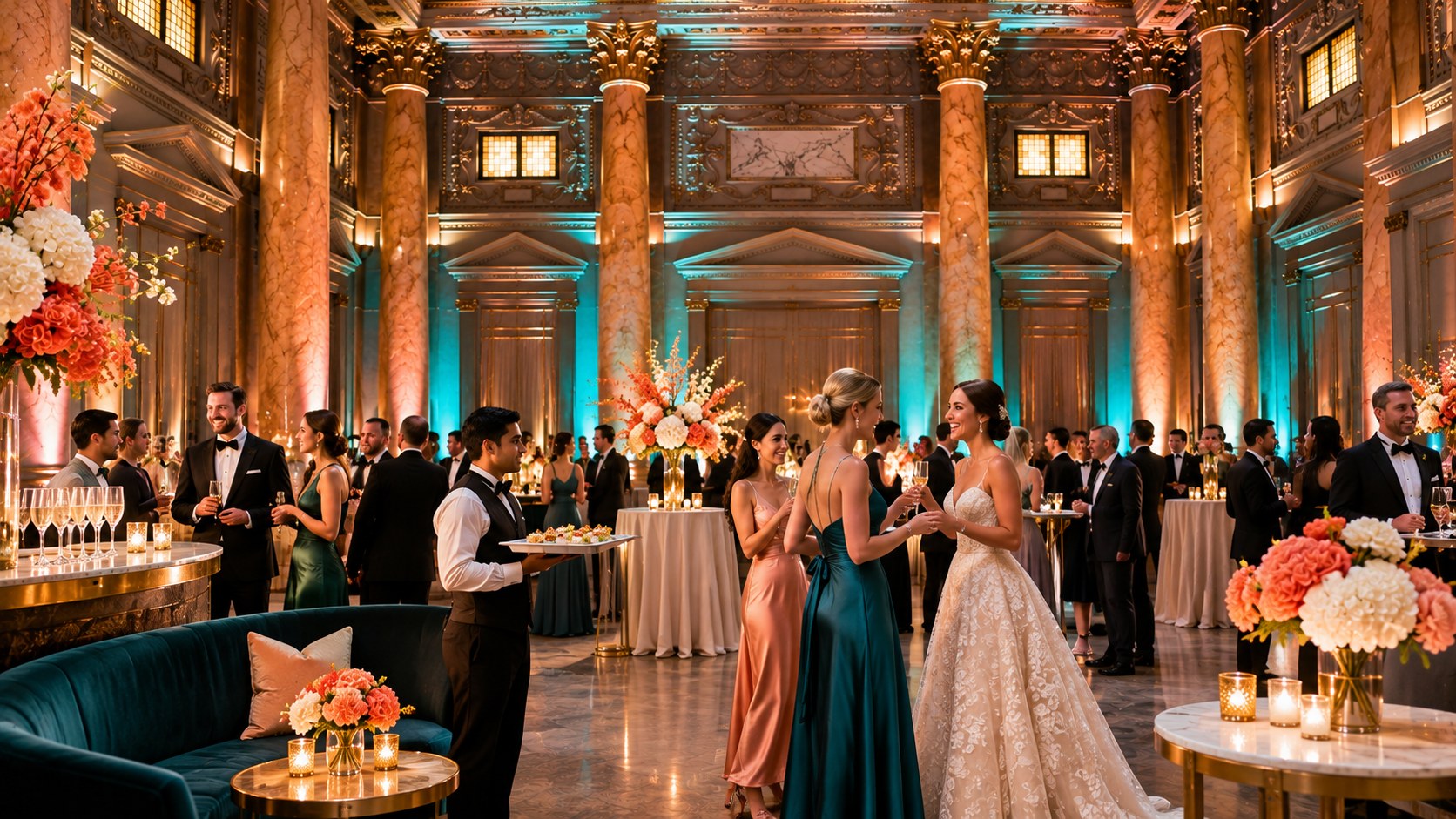
The cocktail hour is the bridge during a flip or move. Guests enjoy cocktails and appetizers while the reception room is set. Plan the cocktail area to be comfortable and engaging — seating, food stations, and a lounge area keep guests happy during the transition. See our cocktail hour layouts guide.

Time the cocktail hour to match the flip or move duration. A 45-minute cocktail hour pairs well with a 45-minute flip. Coordinate with your caterer so food and drinks are ready when guests arrive in the cocktail area.

Timing, staffing, and coordination

Coordinate the transition timing with your venue, caterer, DJ, and photographer. The venue staff handles the room reset; the caterer manages food timing; the DJ manages music and energy; the photographer captures the transition moments. A coordinated team makes the transition seamless. See our timeline and planning checklist for transition timing in your full-day plan.

Confirm staffing for the flip — a larger guest count needs more staff to reset the room quickly. Our venue seats up to 550 guests; a flip for 550 requires a full team and typically 60 minutes. Use the transition planner to estimate your flip time.

Ceremony-to-Reception Transition Planner

Estimate the time needed to transition your space.

Estimated transition time

~15 min

Full transition guide →

FAQ

Frequently Asked Questions

Straight answers to the questions couples ask most about planning an indoor wedding in NYC.

What is a ceremony-to-reception flip?+

A flip is when the same room is reset between the ceremony and reception. Guests move to a cocktail area while the venue rotates ceremony seating into dinner tables. It is the most space-efficient transition and very common at indoor NYC venues.

How long does a ceremony-to-reception flip take?+

A flip typically takes 30 to 60 minutes depending on guest count and staffing. A larger guest count needs more staff and time. Use the transition planner to estimate your flip time based on your setup.

What is the move transition?+

The move uses separate ceremony and reception rooms. Guests move from the ceremony room to the reception room, which is set for dinner throughout the ceremony. It eliminates the flip and typically takes 15 to 30 minutes.

What is continuous flow?+

Continuous flow needs no transition. A round-table ceremony has guests already at dinner tables, or a cocktail-style reception flows directly into mingling. It eliminates downtime entirely and suits relaxed, modern celebrations.

Which transition is best for my wedding?+

The flip is most space-efficient for a single room. The move eliminates the flip if you have two rooms. Continuous flow eliminates downtime for relaxed or cocktail-style celebrations. Your venue and style decide.

What happens during the cocktail hour?+

Guests enjoy cocktails and appetizers in a separate area or lounge while the reception room is set. Plan comfortable seating, food stations, and a lounge area. Time the cocktail hour to match the flip or move duration.

How do I time the cocktail hour with the flip?+

Time the cocktail hour to match the flip or move duration. A 45-minute cocktail hour pairs well with a 45-minute flip. Coordinate with your caterer so food and drinks are ready when guests arrive.

How many staff do I need for a flip?+

A larger guest count needs more staff to reset the room quickly. A flip for 200 guests may need 8 to 12 staff; a flip for 550 may need a full team. Confirm staffing with your venue.

Can I avoid a flip entirely?+

Yes. Use the move (two rooms) or continuous flow (round-table ceremony or cocktail style) to avoid a flip. Both eliminate the reset time and keep the energy moving.

How do I coordinate the transition with my vendors?+

Coordinate timing with your venue (room reset), caterer (food timing), DJ (music and energy), and photographer (transition moments). A coordinated team makes the transition seamless. See our timeline guide.

What if my ceremony and reception share a room?+

Plan a flip. Guests move to a cocktail area while the room is reset. Time the cocktail hour to match the flip duration. The flip is the standard approach for shared rooms.

How do I keep guests comfortable during a flip?+

Plan a comfortable cocktail area with seating, food stations, and a lounge. Time the cocktail hour to match the flip. Keep guests engaged with music and appetizers so the transition feels seamless.

Can the ceremony and reception be in the same space without a flip?+

Yes, with a round-table ceremony layout. Guests are already at dinner tables for the ceremony, so dinner begins after. This is continuous flow and eliminates the flip entirely.

How does the transition affect my timeline?+

Build the transition into your timeline. A 45-minute flip plus 45-minute cocktail hour adds 90 minutes between ceremony and dinner. See our timeline guide for a full-day plan with transitions.

What is the most space-efficient transition?+

The flip is the most space-efficient — it uses one room for both ceremony and reception. This maximizes a single room and is common at indoor NYC venues where space is at a premium.

How do I plan a flip for a large wedding?+

For 300+ guests, plan a longer flip (45 to 60 minutes) with full staffing and a substantial cocktail hour. Confirm the venue team can reset the room in time. See our large venues guide for high-capacity transitions.

How do I plan a transition for an intimate wedding?+

For under 75 guests, a flip is quick (20 to 30 minutes) or continuous flow eliminates it. An intimate wedding may not need a formal cocktail hour. See our intimate venues guide.

Can I have the ceremony in the cocktail area?+

Some venues host the ceremony in the cocktail area, then guests move to the reception room. This works if the cocktail area suits a ceremony. Confirm sightlines and acoustics for the ceremony.

How do I make the transition feel seamless?+

Plan the cocktail hour to match the flip, coordinate vendors, keep guests engaged with food and music, and have the reception room fully set before guests enter. A coordinated team makes it seamless.

How do I start planning my ceremony-to-reception transition in NYC?+

Use the Inquiry button in the navigation or visit our inquiry page. Share your guest count and venue layout. We respond with transition options and a timeline for your day.

Ready to see your indoor venue in person?

Tell us about your date, guest count, and the indoor setting you imagine. We will walk you through availability, layouts, lighting, and climate comfort for your season.