Planning Guide
Indoor Wedding Timeline in NYC
An indoor wedding timeline is more predictable than an outdoor one because weather never forces a change. This guide breaks the timeline into month-by-month planning — from 12+ months out through the final weeks — and a day-of schedule from vendor load-in to the last dance, with ceremony-to-reception flip timing for a smooth indoor wedding in NYC.
Why an indoor wedding timeline is more predictable
An indoor wedding timeline is more predictable than an outdoor one because weather never forces a change. Rain does not push your ceremony inside, heat does not shorten cocktail hour, and cold does not rush the reception. That predictability lets you plan each moment with confidence — from vendor load-in to the last dance. This guide breaks the timeline into months-out planning and a day-of schedule.
Use this timeline alongside our planning checklist and how to plan guide. When you are ready, use our inquiry page to lock your date.
- ✓Weather never forces a timeline change indoors
- ✓Vendor load-in is predictable with a loading dock and power
- ✓A ceremony-to-reception flip can be timed precisely
- ✓Lighting cues are scheduled by moment, not by sunset
- ✓The day-of schedule runs from arrival to last dance
12+ months out: set the foundation
Twelve or more months out, set your date and guest count, book your venue, and reserve your top-choice vendors. Popular indoor NYC venues book 9 to 16 months ahead, especially for Saturday nights in peak season. Locking your venue early secures your date and lets the rest of the timeline fall into place.
This is also when you choose your indoor venue type and neighborhood. See our indoor wedding types and NYC areas guides to decide.
12+ months checklist
- ✓Set your date and estimated guest count
- ✓Book your indoor venue and sign the contract
- ✓Reserve your photographer, florist, and DJ or band
- ✓Choose your venue type and NYC neighborhood
- ✓Begin a rough budget — see our budget guide
6 to 9 months out: design and details
Six to nine months out, focus on design and details. Choose your layout — banquet, theater, cocktail, or a ceremony-to-reception flip — and begin lighting and decor plans. Because the environment is controlled, you can plan each layer with precision. See our layout guide and lighting design guide.
This is also when you confirm catering, plan your menu, and order attire. Send save-the- dates so guests can plan travel to your NYC venue.
6 to 9 months checklist
- •Choose your layout and confirm it fits your guest count
- •Begin lighting, acoustics, and decor plans
- •Confirm catering and plan your menu
- •Order attire and send save-the-dates
- •Plan the ceremony-to-reception transition if applicable
4 to 8 weeks out: finalize the plan
Four to eight weeks out, finalize the plan. Collect RSVPs, finalize the floor plan, confirm vendor timelines, and lock lighting cues. Confirm climate comfort for your season — heating for winter, AC for summer — and accessibility arrangements. See our climate comfort and accessibility guides.
Send final guest counts to your caterer, confirm the ceremony-to-reception flip timing with your venue, and share the day-of schedule with every vendor.
- ✓Collect RSVPs and finalize the guest count
- ✓Finalize the floor plan and seating arrangements
- ✓Confirm vendor timelines and lighting cues
- ✓Confirm climate comfort and accessibility for your season
- ✓Share the day-of schedule with all vendors
The day-of indoor wedding schedule
The day-of schedule runs from vendor load-in to the last dance. Because the venue is indoors, lighting cues are scheduled by moment rather than by sunset, and the flip can be timed precisely. Use the transition planner below to estimate your flip time.
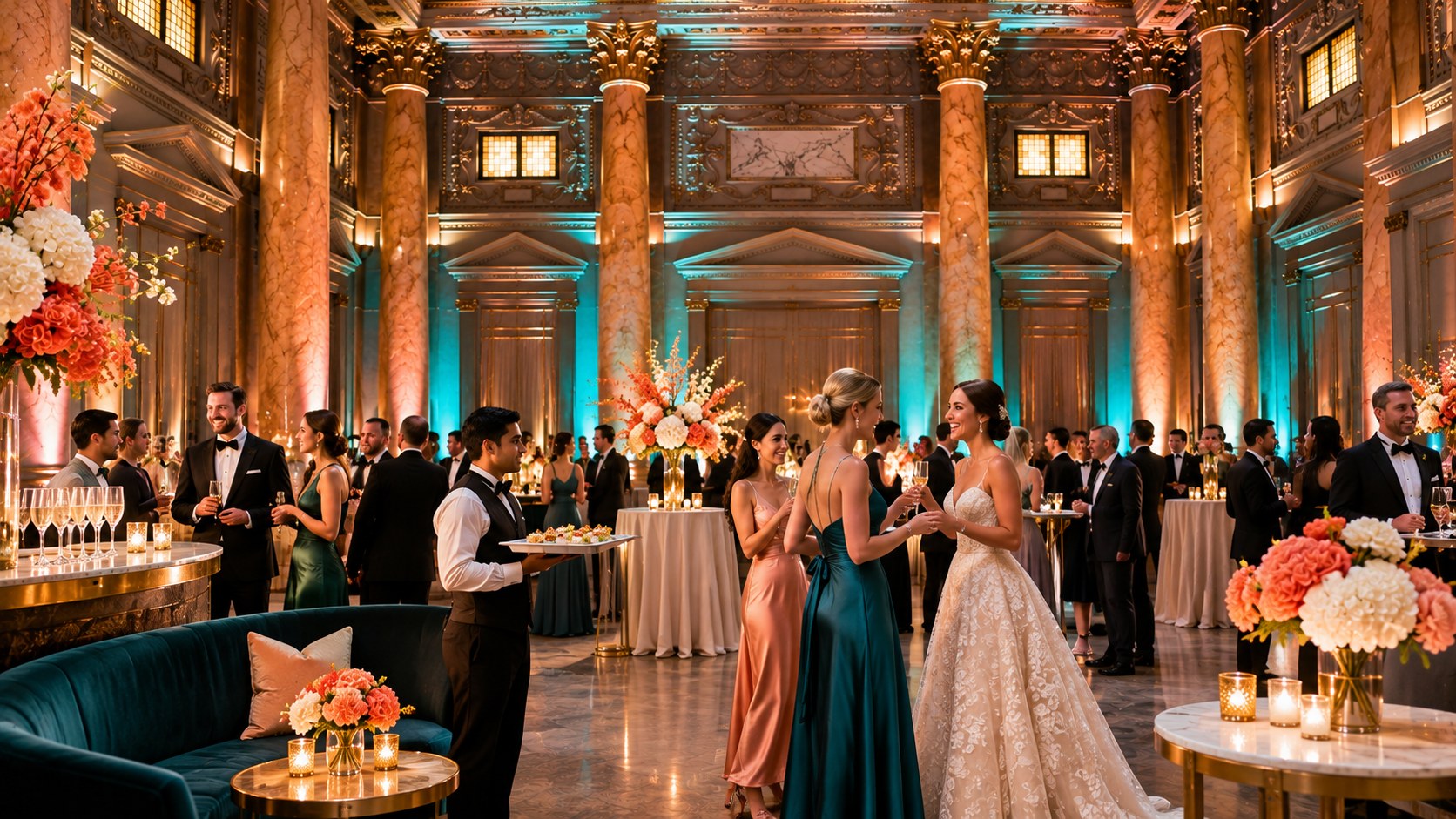
A typical indoor evening wedding schedule moves from load-in and setup, to ceremony, to cocktail hour (often during a flip), to dinner and toasts, to dancing, and finally to the last dance and send-off. Coordinate each handoff with your venue and vendors.
Sample day-of schedule
- •Morning: vendor load-in, decor and lighting setup
- •Afternoon: bridal party ready in the suite, final venue check
- •Late afternoon: guest arrival, coat check, seating
- •Ceremony: processional, vows, recessional
- •Cocktail hour: guests mingle while the room flips (if applicable)
- •Reception: grand entrance, dinner, toasts, first dance
- •Dancing: open dance floor, cake cutting, last dance
- •Late: send-off and vendor teardown
Coordinating the ceremony-to-reception flip
If your ceremony and reception share a room, the flip is the most important timed transition. Guests move to a cocktail area while the venue resets ceremony seating into dinner tables. The time depends on your guest count and transition type — use the transition planner below to estimate. See our ceremony-to-reception transition guide for the full strategy.
Build buffer into the flip so guests are never waiting too long, and coordinate the cocktail hour to overlap the reset. A well-timed flip feels seamless to your guests.