Indoor Wedding VenuesInquiry
HomeIndoor Wedding TypesLayoutsSeasonal WeddingsNYC AreasPlanning GuidesVenue
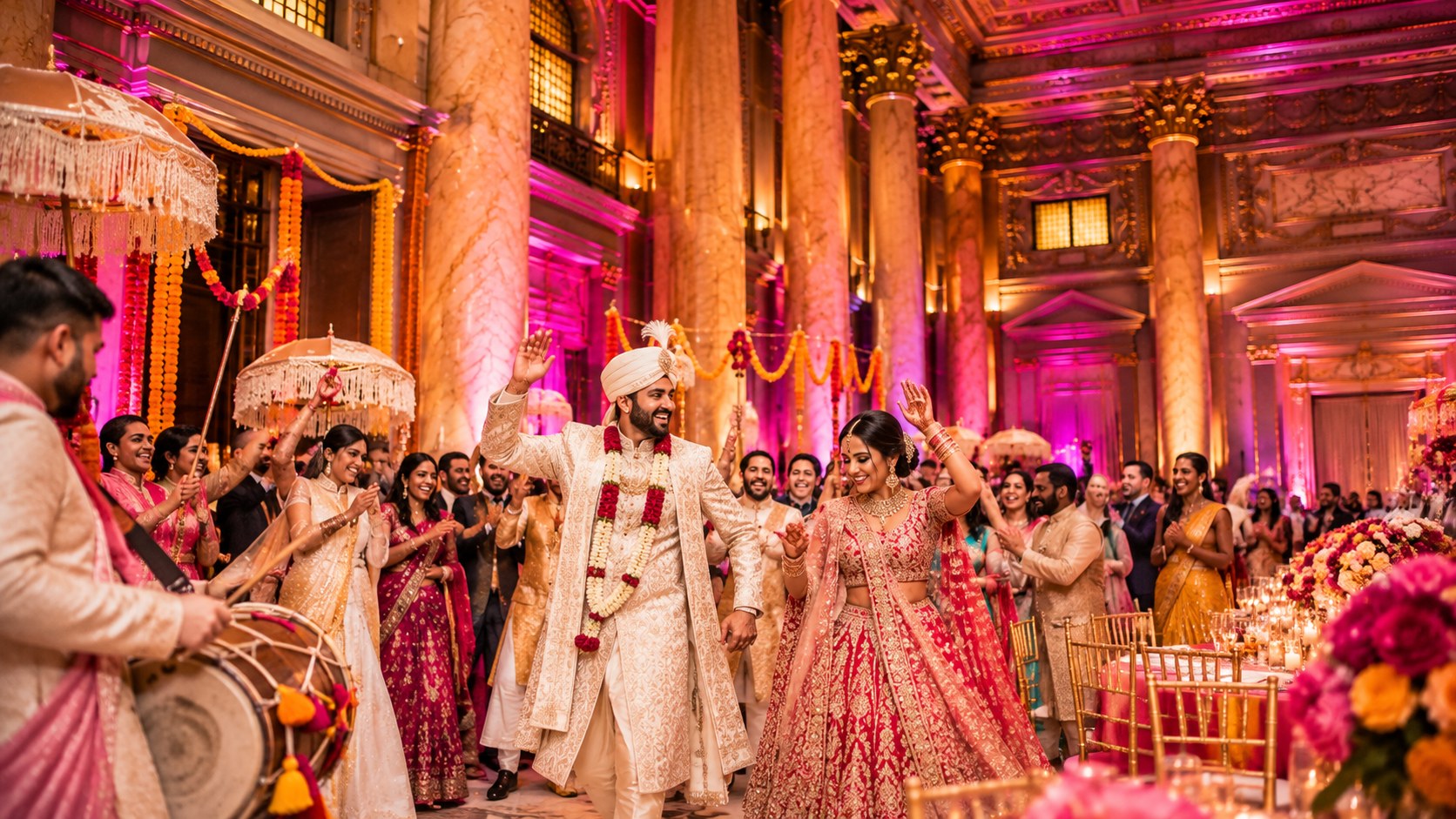
Indoor wedding stage design in NYC with ceremony focal point and lighting
Indoor wedding stage design with ceremony focal point and lighting — Indoor Wedding Venues, NYC

Stage Design

Indoor Wedding Stage Design in NYC

A stage elevates the focal point of your ceremony or reception. Indoors, you control the height, backdrop, and lighting precisely. This guide covers ceremony, head table, and band stages — focal points, backdrops, lighting, accessibility, and safety for cultural and large indoor weddings in NYC.

Why stage design matters for indoor weddings

A stage elevates the focal point of your ceremony or reception — whether it is a ceremony arch, a head table, a band performance area, or a cultural mandap. Indoors, you control the stage height, backdrop, and lighting precisely, with no weather to limit the design. A well-designed stage draws every eye to the most important moments.

Stage design is especially important for cultural weddings with specific focal-point requirements and for large weddings where guests at the back need an elevated view. See our cultural venues and large venues guides.

  • ✓Full control over stage height, backdrop, and lighting
  • ✓Elevates the focal point — ceremony arch, head table, band, or mandap
  • ✓Draws every eye to the most important moments
  • ✓No weather to limit the design
  • ✓Essential for cultural weddings and large guest counts

Ceremony stage and focal-point design

A ceremony stage elevates the couple so every guest has a clear view. The focal point — a floral arch, chuppah, mandap, or statement backdrop — sits on the stage. Indoors, the stage can be placed against a wall, in the center, or in front of architectural features. Confirm the stage height suits your room and guest sightlines.

For cultural ceremonies, the stage design must accommodate specific focal-point requirements. A mandap for Hindu ceremonies, a chuppah for Jewish ceremonies, or a stage for traditional processions — each has specific design needs. See our cultural venues guide.

Head table and reception stage

An elevated head table stage raises the couple and wedding party so every guest has a view. The stage runs along one wall or across one end of the room, often highlighted with lighting. Confirm the elevation does not block sightlines from the back of the room.

For very large receptions, an elevated head table ensures guests at the back can see the couple during toasts and dinner. See our seating arrangements guide for head table options.

  • •Elevated head table raises the couple and wedding party
  • •Every guest has a view during toasts and dinner
  • •Stage runs along a wall or across one end of the room
  • •Highlighted with lighting for a focal effect
  • •Essential for very large receptions

Band and performance stage

A live band needs a performance stage near the dance floor — typically behind or beside it. The stage should be sized for the band, with power and audio routing planned. Confirm the stage height gives the band visibility without blocking guest sightlines. See our dance floor layouts guide.

A DJ booth needs a smaller footprint but should be elevated or positioned for clear sightlines. Coordinate power and audio routing for both band and DJ setups. See our acoustics guide for sound planning.

Stage lighting and backdrop

Stage lighting highlights the focal point — a spotlight on the couple, uplighting on a floral arch, or wash lighting on a band. Because the room is enclosed, the lighting is consistent all night. Plan a backdrop that complements the stage — drapery, florals, or architectural features. See our lighting design guide.

Use the lighting checklist below to plan each layer of stage lighting. Coordinate with your lighting designer or DJ for synced effects.

Accessibility and safety for stages

Confirm the stage has step-free or ramped access for accessibility — the couple, wedding party, and any guests who join on stage need safe access. Confirm the stage surface is stable and the edges are clearly marked for safety. Our accessibility guide covers stage accessibility.

For elevated stages, confirm railings or clear edge markings prevent falls. Coordinate with your venue on stage construction and safety requirements.

Indoor Lighting Checklist

0/8 complete

Complete lighting checklist →

FAQ

Frequently Asked Questions

Straight answers to the questions couples ask most about planning an indoor wedding in NYC.

What is a wedding stage?+

A wedding stage elevates the focal point of your ceremony or reception — a ceremony arch, head table, band performance area, or cultural mandap. Indoors, you control the stage height, backdrop, and lighting precisely. A well-designed stage draws every eye to the most important moments.

Do I need a stage for my indoor wedding?+

A stage is optional but valuable for large weddings where guests at the back need an elevated view, and for cultural weddings with specific focal-point requirements. For intimate weddings, a stage may not be necessary. Your guest count and ceremony type decide.

How high should a wedding stage be?+

A ceremony or head-table stage is typically 12 to 24 inches high — enough to elevate the couple for clear sightlines without being difficult to access. A band stage may be higher. Confirm the height suits your room and guest sightlines.

What is a ceremony focal point?+

A ceremony focal point is where the ceremony happens — a floral arch, chuppah, mandap, or statement backdrop. It sits on or near the stage. Indoors, it can be placed against a wall, in the center, or in front of architectural features.

How do I design a stage for a cultural wedding?+

Cultural ceremonies may require specific focal points — a mandap for Hindu ceremonies, a chuppah for Jewish ceremonies, or a stage for traditional processions. Confirm the stage design accommodates your ceremonial requirements. See our cultural venues guide.

Where should the band stage go?+

A live band stage goes near the dance floor — typically behind or beside it. The stage should be sized for the band, with power and audio routing planned. Confirm the stage height gives the band visibility without blocking guest sightlines.

How do I light a wedding stage?+

Plan a spotlight on the couple, uplighting on a floral arch, or wash lighting on a band. Because the room is enclosed, the lighting is consistent all night. Use the lighting checklist to plan each layer. See our lighting design guide.

What backdrop suits a wedding stage?+

A backdrop complements the stage — drapery, florals, or architectural features. Indoors, you can use delicate drapery and florals safely. Choose a backdrop that frames the focal point and complements your decor style. See our decoration checklist.

Are wedding stages accessible?+

Confirm the stage has step-free or ramped access for the couple, wedding party, and any guests who join on stage. Confirm the stage surface is stable and edges are clearly marked. See our accessibility guide for stage accessibility.

How do I make a stage safe?+

Confirm the stage surface is stable, edges are clearly marked or railed for elevated stages, and access is safe. Coordinate with your venue on stage construction and safety requirements. A stable, well-marked stage prevents falls.

Can I have a stage for the head table?+

Yes. An elevated head table stage raises the couple and wedding party so every guest has a view during toasts and dinner. It runs along a wall or across one end of the room, highlighted with lighting.

How do I plan a stage for a large wedding?+

For 300+ guests, an elevated stage ensures guests at the back can see the couple during the ceremony and toasts. Confirm the stage height and sightlines. See our large venues guide for high-capacity stage design.

Do I need a stage for an intimate wedding?+

For under 75 guests, a stage may not be necessary — every guest is already close to the couple. A focal-point arch or backdrop may suffice. See our intimate venues guide.

What is a mandap?+

A mandap is a ceremonial structure used in Hindu weddings where the ceremony takes place. It is a focal point on or near the stage. Confirm the stage design accommodates the mandap. See our cultural venues guide.

What is a chuppah?+

A chuppah is a canopy under which Jewish wedding ceremonies take place. It is a focal point on or near the stage. Confirm the stage design accommodates the chuppah. See our cultural venues guide.

How do I coordinate stage lighting with my DJ?+

Share your stage lighting plan with your DJ or band and lighting designer. Coordinate spotlights, uplighting, and synced effects. A coordinated plan creates a seamless focal-point presentation.

Can the ceremony stage become the dance floor?+

Some indoor weddings use the ceremony stage area as the dance floor after a flip. This is efficient for a ceremony-to-reception flip. See our ceremony-to-reception transition guide.

How much does a wedding stage cost?+

Stage costs vary by size, height, and design. A simple platform stage is more affordable; a custom-designed stage with drapery and lighting is more. Confirm stage options and pricing during your inquiry.

How do I choose a stage backdrop?+

Choose a backdrop that frames the focal point and complements your decor style — drapery for elegance, florals for romance, architectural features for character. Indoors, you can use delicate materials safely. See our decoration checklist.

How do I start planning a stage for an indoor wedding in NYC?+

Use the Inquiry button in the navigation or visit our inquiry page. Share your ceremony type and guest count. We respond with stage design options and a plan for your space.

Ready to see your indoor venue in person?

Tell us about your date, guest count, and the indoor setting you imagine. We will walk you through availability, layouts, lighting, and climate comfort for your season.